Posts

Preventing Path Manipulation Vulnerabilities in Laravel

Image
Introduction In today’s digital world, ensuring your website is secure is a top priority. One of the common vulnerabilities that developers may overlook is path manipulation. This vulnerability can allow an attacker to access sensitive files and directories within a web application. In this post, we’ll take a deep dive into path manipulation in Laravel, its risks, and how to protect your Laravel applications with secure coding practices. Additionally, we'll demonstrate how our Website Security Checker tool can help identify these vulnerabilities and safeguard your Laravel application. What is Path Manipulation? Path manipulation occurs when an attacker is able to modify the file path in a web application to access files outside the intended directories. This can lead to unauthorized access to sensitive files such as configuration files, databases, or log files. Laravel, a popular PHP framework, can be vulnerable to path manipulation if file paths are not properly validated and...

Prevent Open Redirect Vulnerabilities in Laravel: Best Practices

Image
Open Redirect vulnerabilities are a common security loophole in web applications that attackers exploit to redirect users to malicious websites. Laravel, a robust PHP framework, provides tools to mitigate these vulnerabilities if used correctly. This blog will discuss how to detect, prevent, and fix Open Redirects in Laravel with practical examples. Additionally, we'll showcase how our Free Website Security Scanner can assist in identifying these vulnerabilities. What is an Open Redirect Vulnerability? An Open Redirect occurs when a web application takes a user-supplied URL and redirects the user to it without proper validation. Attackers exploit this to redirect users to malicious sites or phishing pages, tricking them into revealing sensitive information. Detecting Open Redirects in Laravel To detect Open Redirects in your Laravel application, you can utilize our tool to  test website security free . It scans for vulnerabilities and provides a detailed report. Below is a s...

Man-in-the-Middle (MitM) Attacks in Laravel: Prevention Guide

Image
  Man-in-the-Middle (MitM) Attacks in Laravel: A Comprehensive Guide with Examples In the ever-evolving cybersecurity landscape, Man-in-the-Middle (MitM) attacks remain a significant threat to web applications. Laravel, one of the most popular PHP frameworks, is no exception. In this blog post, we will explore MitM attacks, their implications for Laravel applications, and how to mitigate them effectively using code examples. What Are Man-in-the-Middle (MitM) Attacks? A MitM attack occurs when an attacker intercepts communication between two parties to steal sensitive information or alter the transmitted data. These attacks often exploit unencrypted communication or poorly configured servers. Impact of MitM Attacks on Laravel Applications User Data Theft : Interception of sensitive user data such as login credentials or payment details. Unauthorized Access : Attackers may impersonate users or servers, leading to unauthorized access. Data Manipulation : Hackers can alter t...

Prevent Session Fixation in Laravel: Guide & Code Example

Image
Preventing Session Fixation in Laravel: A Comprehensive Guide In today’s digital landscape, securing web applications is more important than ever. Session fixation is a critical vulnerability that attackers exploit to hijack user sessions. This blog post dives into what session fixation is, why it’s dangerous, and how to prevent it in your Laravel applications. Additionally, we’ll showcase how tools like our free Website Security checker can help identify vulnerabilities and improve your website's overall security. What Is Session Fixation? Session fixation is an attack where the attacker sets a user's session ID to a known value. Once the user logs in, the attacker can use the same session ID to gain unauthorized access to the user’s session. Why Is Session Fixation Dangerous? Unauthorized access to user accounts. Exposure of sensitive information. Potential for significant reputational damage to your application. How Laravel Handles Session Management Laravel pr...

Protect Laravel Application from Clickjacking: A Complete Guide

Image
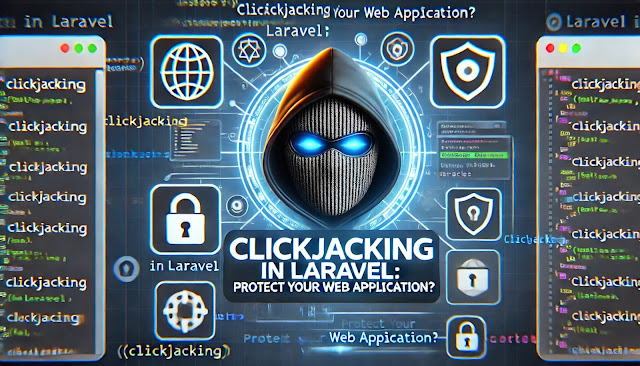
Clickjacking is a type of web-based attack where malicious websites trick users into clicking on something different from what they perceive. In the context of a Laravel application, it's crucial to secure your pages against such attacks. In this post, we’ll walk through how to prevent clickjacking in Laravel by implementing a simple yet effective solution. What is Clickjacking? Clickjacking occurs when a malicious website uses transparent or invisible frames to trick users into performing actions on another website. For example, a user might think they are clicking a button on a legitimate website, but they are actually interacting with a hidden iframe containing harmful content. Example Scenario : Imagine a user visiting a website that has an invisible iframe containing a "Submit Payment" button from your Laravel application. The user unknowingly clicks on it, authorizing a transaction they didn’t intend to make. How to Prevent Clickjacking in Laravel To prevent...

Avoid Unrestricted File Upload Vulnerabilities in Laravel

Image
Unrestricted file upload is a critical vulnerability that can expose your Laravel applications to malicious attacks. In this blog, we will explore this vulnerability, its implications, and how to secure your application with proper coding practices. To make your website even more secure, use our Free Website Security Checker  tool to assess potential vulnerabilities and enhance your defenses. What Is Unrestricted File Upload? Unrestricted file upload occurs when an application fails to validate the type, size, or content of uploaded files. Attackers can exploit this to upload malicious scripts, leading to: Unauthorized access Code execution Data breaches The Impact of Unrestricted File Upload For example, if an attacker uploads a PHP file disguised as an image, they can execute arbitrary commands on your server. This could result in data theft or complete system compromise. To ensure your Laravel application is secure, follow the coding practices outlined below. Best...

Understanding File Inclusion Vulnerabilities in Laravel

Image
Laravel, a popular PHP framework, is widely used for building robust web applications. However, like any software, it is not immune to vulnerabilities. Among these, file inclusion vulnerabilities pose a significant risk if left unchecked. This blog will explore file inclusion vulnerabilities, how they manifest in Laravel applications, and how you can safeguard your website. Plus, we'll demonstrate how to use our free Website Security Checker tool to identify vulnerabilities in your application. What Are File Inclusion Vulnerabilities? File inclusion vulnerabilities occur when an application dynamically includes files without properly validating user input. This can allow attackers to manipulate file paths and include unauthorized files. There are two main types: Local File Inclusion (LFI): Enables access to files stored on the server. Remote File Inclusion (RFI): Allows the inclusion of remote files hosted on a different server. How Do File Inclusion Vulnerabilities Imp...